
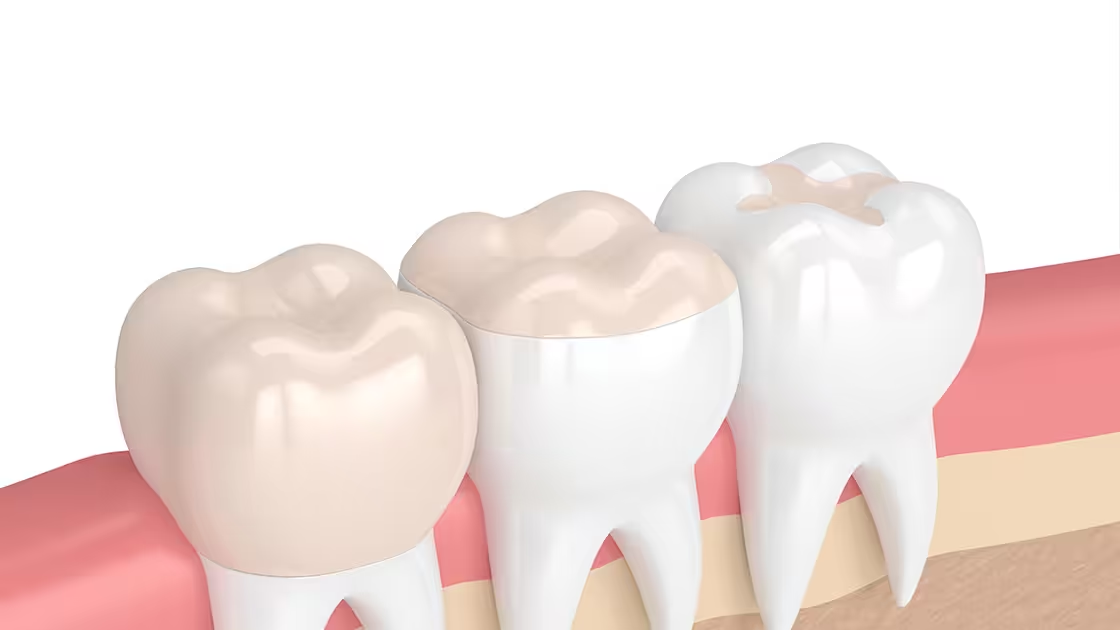
For larger cavities or a tooth with decay in more than one area, an inlay or onlay may be the best restorative solution.
The difference between an inlay and an onlay is the area of the tooth anatomy being restored. Inlays apply to cavities in the grooves, or pits and fissures, of the tooth’s biting surface. Onlays are used when the decay includes the tooth cusps. Both are used to restore areas where tooth decay is present and the tooth structure has been compromised.
Custom-Crafted Restorations for Precision and Durability
Inlays and onlays can be made with either cast gold alloy or with tooth-colored ceramic or porcelain materials. A model of the patient’s natural tooth is made prior to any procedure so that the restoration can be made to replicate the shape and function of the natural tooth.
The shape and fit of the restoration can be verified before being cemented or bonded into place, and the inlay or onlay can be extremely durable.

Why Choose Us?
For families across Campbell and the surrounding South Bay, our two-doctor team offers something that’s increasingly rare: comprehensive care under one roof, delivered by dentists who take the time to know you. From routine cleanings and fillings to dental implants, Invisalign, and full mouth reconstruction, most of what you need is handled here — without a referral across town.
That care is backed by technology we’ve chosen for your comfort as much as our precision. Digital scanning replaces messy impression trays, 3D cone beam imaging lets us plan implants with confidence, and same-day CAD/CAM restorations mean many crowns are finished in a single visit. Both doctors are active members of the American Dental Association and pursue ongoing advanced training, so your care reflects current thinking — not habit.